
SimCert Practice Hub
Prepare for CHSOS® and CHSE® certification.
Prepare for CHSOS® and CHSE® with original practice questions, timed exams, flashcards, and focused domain study. Review explanations, revisit missed questions, and build your study plan from your results.
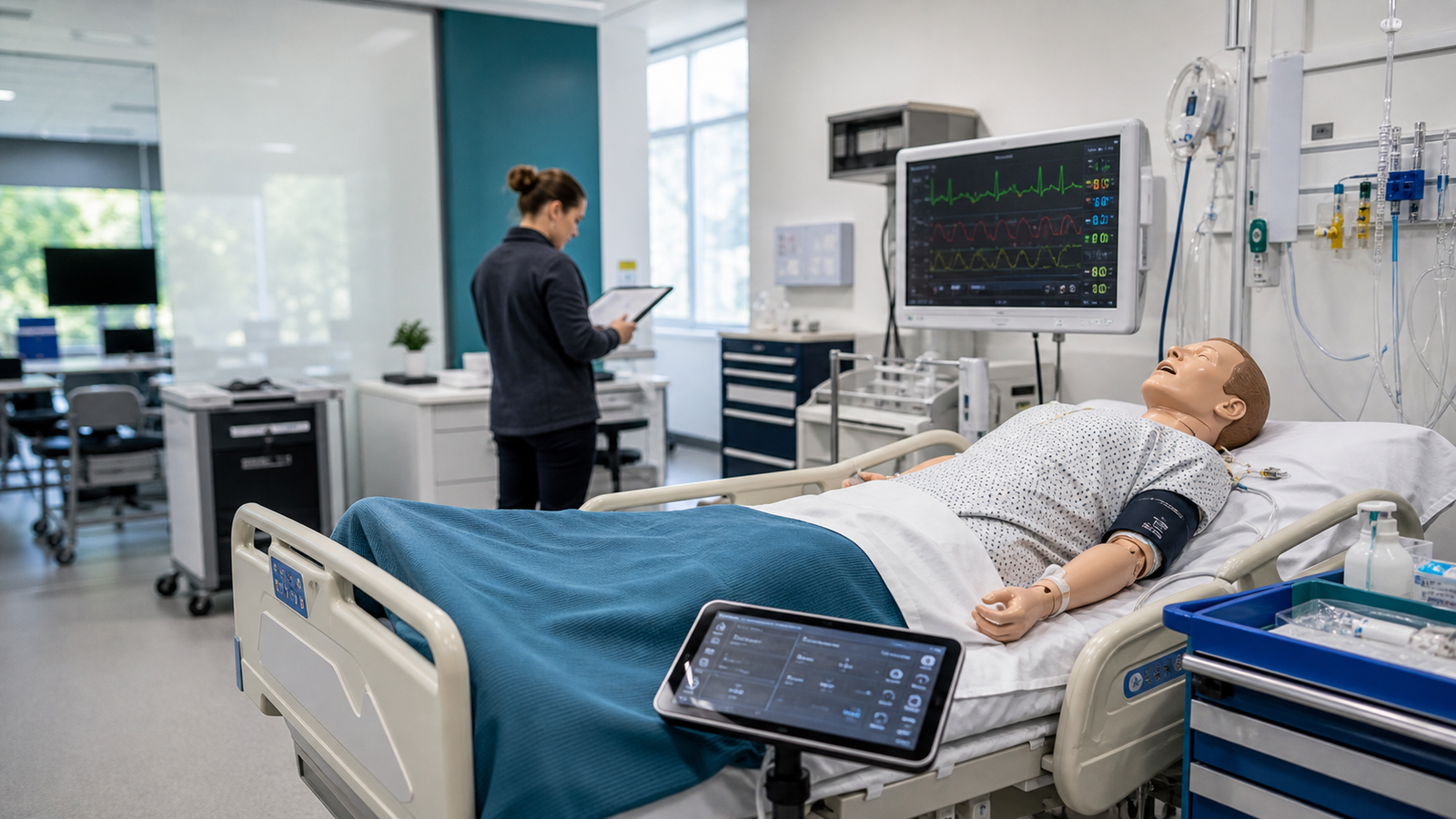
SimCert Practice Hub is independent and unofficial. It includes original educational practice items only and does not predict certification exam performance.
Choose your certification
CHSOS®
Simulation operations specialists
Technology troubleshooting, equipment readiness, simulation delivery, professional practice, and instructional support.
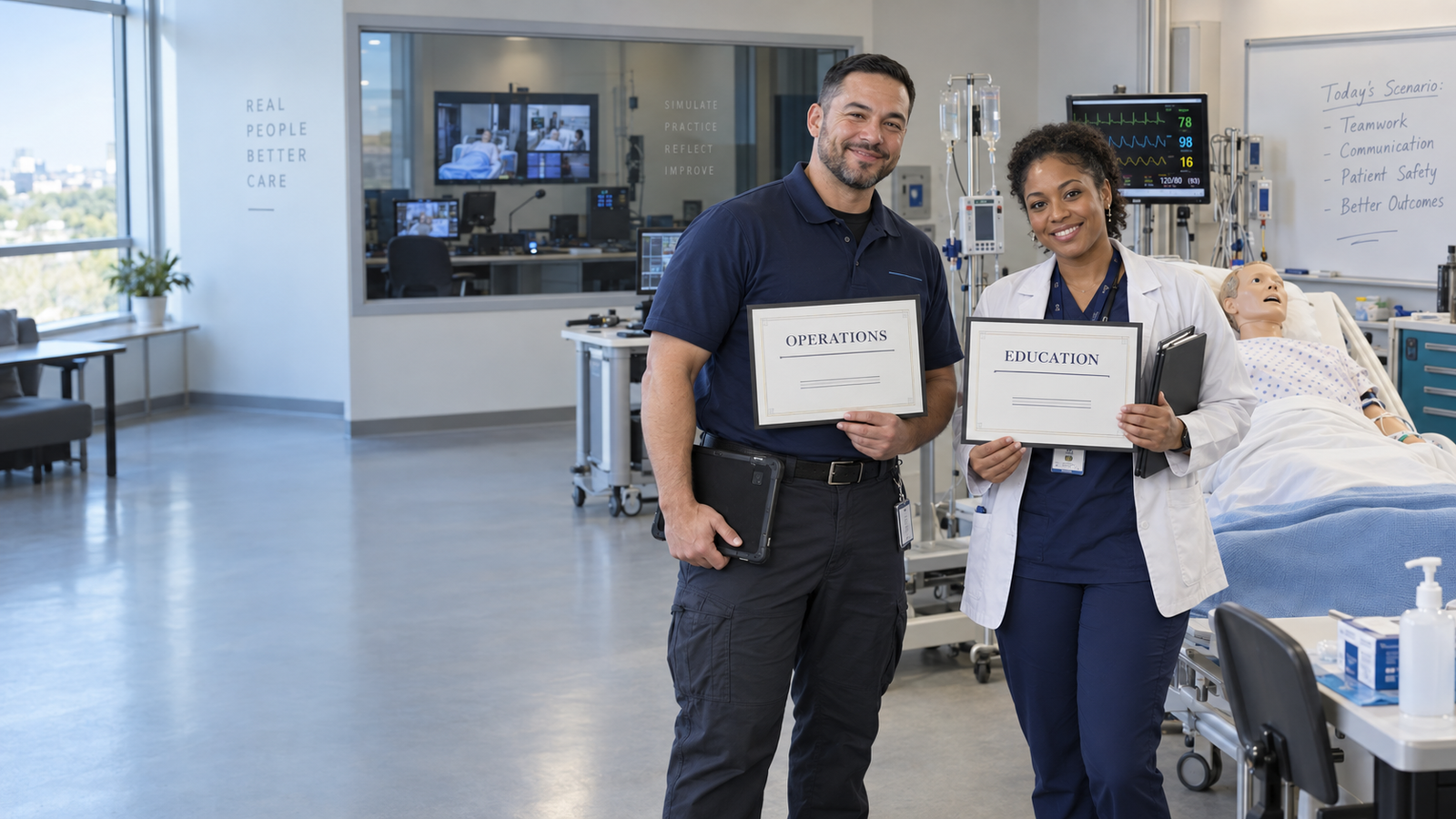
CHSE®
Healthcare simulation educators
Learning design, facilitation, debriefing, assessment, professional values, and simulation program resources.
Explore CHSOS® domains
All certification domainsExamples and focused practice mapped to the published blueprint.
Concepts in Healthcare as Applied to Simulation
General healthcare concepts, terminology, roles, anatomy, physiology, medications, equipment, and environments.
10%
Concepts in Healthcare as Applied to Simulation
General healthcare concepts, terminology, roles, anatomy, physiology, medications, equipment, and environments.
Example study cues
- Identify common clinical roles, patient-safety terms, medication-handling boundaries, and care-area vocabulary.
- Recognize when anatomy, physiology, or equipment knowledge is needed to support a realistic scenario.
- Use correct healthcare terminology when communicating with faculty, learners, standardized patients, and vendors.
Simulation Technology Operations
Manikins, A/V systems, networking, connectivity, equipment setup, troubleshooting, data, maintenance, and modality operations.
35%
Simulation Technology Operations
Manikins, A/V systems, networking, connectivity, equipment setup, troubleshooting, data, maintenance, and modality operations.
Example study cues
- Trace an audio path from microphone source to mixer, capture system, and debriefing room playback.
- Compare manikin, task trainer, screen-based, avatar, and 3-dimensional virtual simulation setup needs.
- Troubleshoot power, network, software, and peripheral issues with a repeatable checklist before replacing equipment.
Healthcare Simulation Practices, Principles, and Procedures
Scenario setup, reset, realism, safety, inventory, scheduling, documentation, quality improvement, and resource use.
25%
Healthcare Simulation Practices, Principles, and Procedures
Scenario setup, reset, realism, safety, inventory, scheduling, documentation, quality improvement, and resource use.
Example study cues
- Plan setup, reset, moulage, supplies, documentation, scheduling, and room turnover around scenario objectives.
- Use inventory, equipment-readiness, and safety checks to reduce avoidable interruptions during simulation.
- Apply quality-improvement notes after sessions to improve repeatability and learner support.
Professional Role: Behavior, Capabilities, and Leadership
Ethics, confidentiality, collaboration, role clarity, leadership, DEI, professional development, and psychological safety.
15%
Professional Role: Behavior, Capabilities, and Leadership
Ethics, confidentiality, collaboration, role clarity, leadership, DEI, professional development, and psychological safety.
Example study cues
- Protect confidentiality when recordings, learner data, or assessment notes are handled.
- Clarify operations-specialist responsibilities during prebriefing, scenario delivery, and debriefing support.
- Use professional communication, inclusive practice, and escalation paths when a session risk appears.
Concepts in Instructional Design as Applied to Simulation
Needs assessment, objectives, outcomes, assessment, logistics, scenario design, prebriefing, debriefing, and evaluation.
15%
Concepts in Instructional Design as Applied to Simulation
Needs assessment, objectives, outcomes, assessment, logistics, scenario design, prebriefing, debriefing, and evaluation.
Example study cues
- Connect learning objectives to scenario events, cueing, assessment criteria, and debriefing priorities.
- Support needs assessments by matching learner level, modality, resources, and expected outcomes.
- Prepare prebriefing and evaluation materials that align with the educational plan.
Your study tools
Flashcards
Recall key terms and work through scenario prompts at your own pace.
ExploreAdvanced certifications
Plan CHSOS-A® or CHSE-A® evidence with portfolio guidance and a personal checklist.
ExploreStudy resources
Official certification pages, exam blueprints, the simulation dictionary, and SimGHOSTS.
ExploreTurn practice into
a study plan.
Create a free profile to save completed sessions and domain scores across devices. Use your results to choose your next topic.
SimCert Practice Hub · A free resource by BrainNet Consulting Inc.