Designing a Medical Simulation Centre: A Practical Guide for Educators
Where to start when a new centre must move from ambition to a workable plan: begin with learning use cases, plan the support spaces, and settle AV, IT, and clinical infrastructure while layouts can still change.
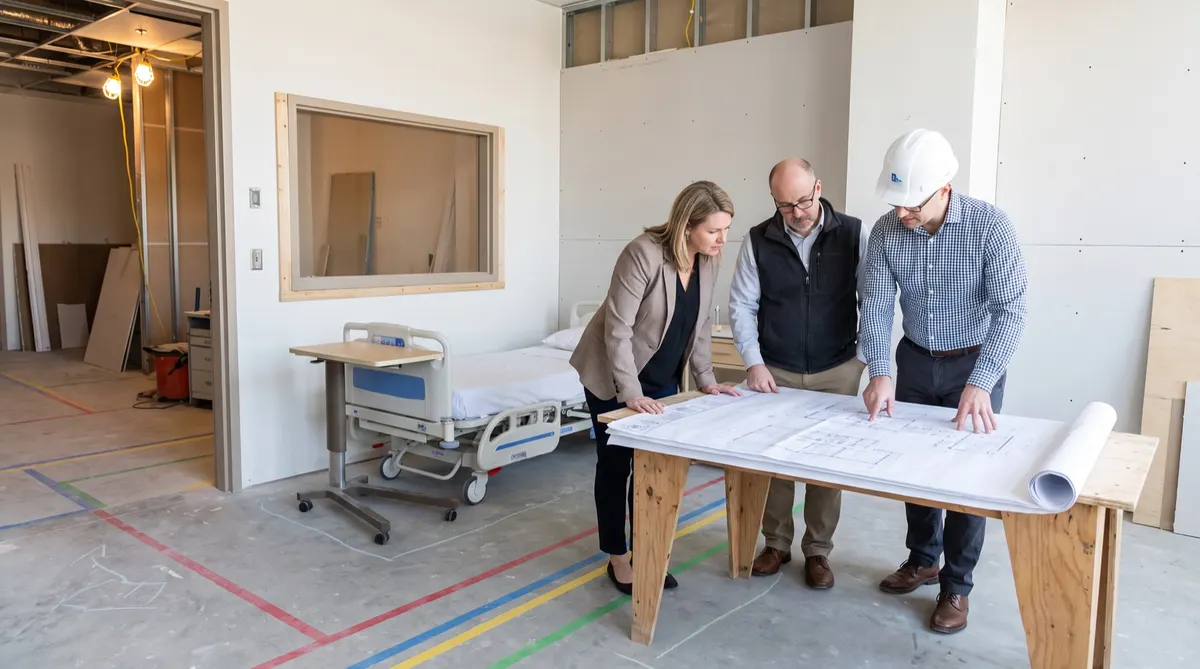
Start with learning use cases
A simulation centre should begin with the scenarios, learners, faculty models, assessment needs, and clinical workflows it must support.
Room names alone are not enough. The planning team needs to understand throughput, preparation, observation, debriefing, storage, and reset between scenarios.
Plan the support spaces
Storage, control rooms, faculty work areas, technician space, clean and dirty utility, and equipment movement often determine whether a centre works in daily use.
These areas are easy to compress during design, but they carry much of the operational load after opening.
Coordinate technology early
AV, IT, power, data, acoustics, clinical infrastructure, and equipment clearances should be discussed while layout decisions are still flexible.
Early coordination reduces redesign and protects the teaching model from late technical compromises.
Common questions
When should simulation expertise join a project?
As early as feasibility or functional programming. Early advice can prevent layout, infrastructure, equipment, and operational problems from becoming expensive changes.
Is a simulation centre mainly an equipment project?
No. Equipment matters, but the centre also depends on workflow, storage, AV, IT, faculty support, staffing, scheduling, and governance.
Written by Ferooz Sekandarpoor, founder of SimCert Practice Hub. Planning a new centre or a renovation? BrainNet Consulting helps teams with simulation centre design, AV and IT planning, and operational readiness.
Ready to practice? CHSOS questions or CHSE questions.