Simulation AV Is Not Regular AV: What Project Teams Need to Know
Why capture, observation, and debriefing systems need their own planning: multiple camera angles, monitor capture, fast playback, recording policies, and racks, cooling, and network decided before construction documents close.
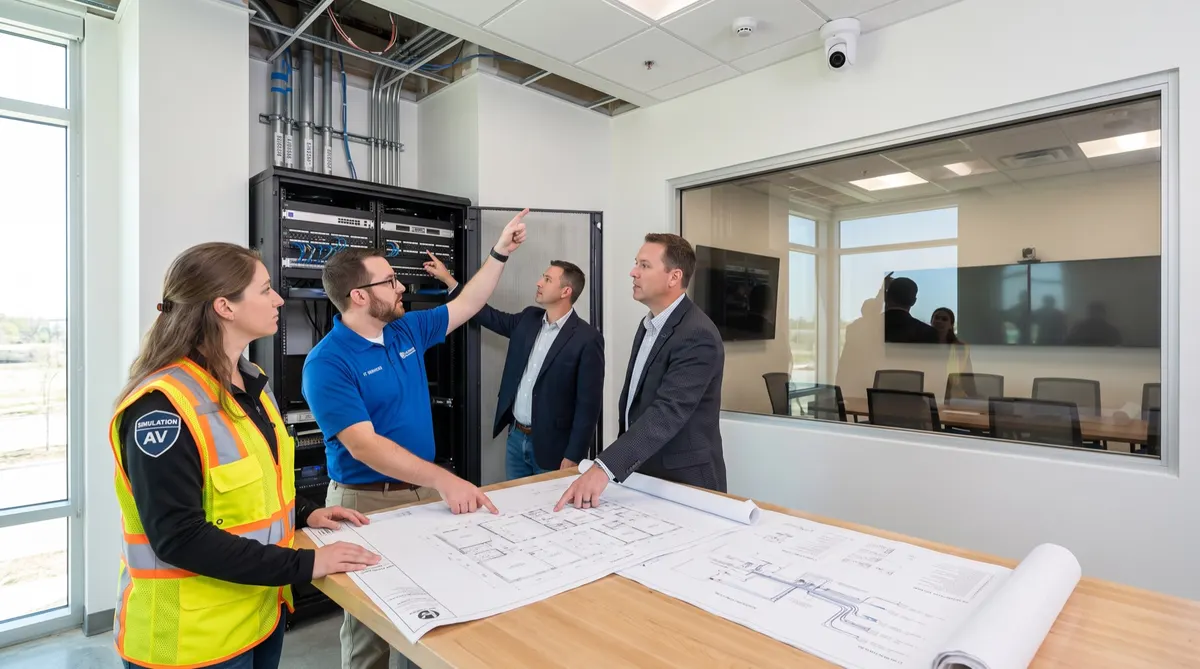
Observation changes the design
Simulation spaces often require multiple camera angles, ceiling microphones, auxiliary video inputs, patient monitor capture, and discreet observation.
The result is a teaching system, not only a presentation system.
Debriefing drives workflow
Good debriefing depends on fast retrieval, reliable playback, clear audio, simple room control, and faculty workflows that do not distract from teaching.
Teams should define how recordings are created, reviewed, stored, shared, and deleted before finalizing infrastructure.
Infrastructure details matter
Racks, cooling, cable paths, network segmentation, privacy requirements, power, acoustics, and support access should be coordinated before construction documents are complete.
Common questions
Can standard classroom AV support simulation?
Usually not by itself. Simulation AV must handle capture, observation, debriefing, assessment, clinical signals, and privacy-sensitive workflows.
Should AV be planned before equipment is selected?
AV and equipment should be coordinated together because patient monitors, simulators, room layouts, and debriefing workflows affect one another.
Written by Ferooz Sekandarpoor, founder of SimCert Practice Hub. Planning a new centre or a renovation? BrainNet Consulting helps teams with simulation centre design, AV and IT planning, and operational readiness.
Ready to practice? CHSOS questions or CHSE questions.